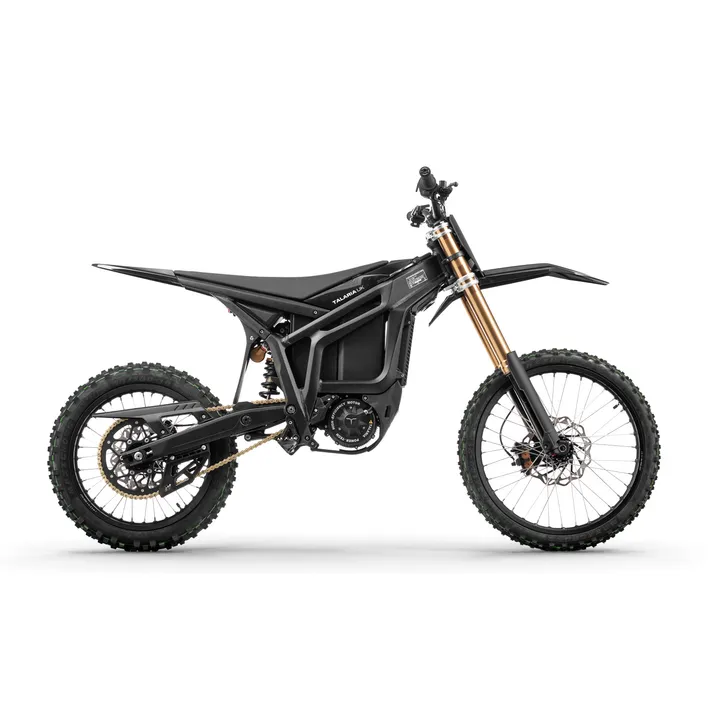
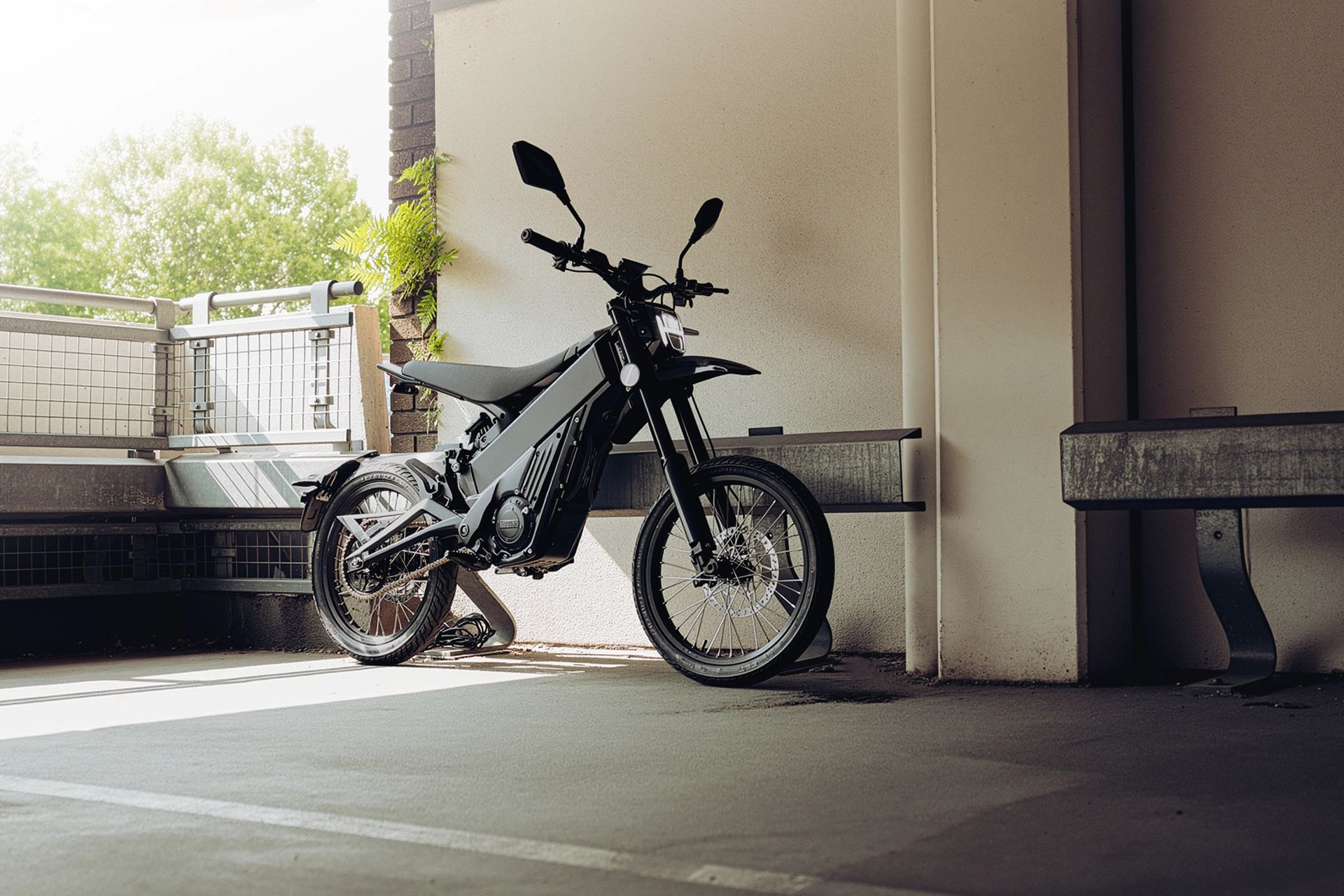
Before you buy, it pays to know exactly what the law asks of you. The rules for electric dirt bikes in the UK are actually simple once you split them into two questions: where will you ride, and is the bike road-legal? Here’s the plain-English answer on licences, CBT, tax and insurance.
The one question that decides everything: private land or road?
- Private land / tracks only? You need the landowner’s permission — and that’s it. No licence, no CBT, no tax, no insurance is legally required to ride an off-road (MX) bike on private land. This is why children can ride junior bikes like the JR-12.
- Public roads? You need a road-legal (type-approved) bike, the right licence, DVLA registration, tax and insurance. Riding an unregistered off-road bike on the road, pavement, bridleway or in a public park is illegal.
Riding on the road: what you actually need
If you want to commute or ride legally on public roads, here’s the checklist:
- A road-legal Talaria — an EEC type-approved L1E or L3E model
- The correct licence or CBT for the category
- DVLA registration and a number plate
- Vehicle tax (many electric bikes qualify for a £0 rate, but you still tax the vehicle)
- Insurance
- An approved helmet
Licence and CBT: L1E vs L3E
| L1E (moped-class) | L3E (motorcycle-class) | |
|---|---|---|
| Minimum age | 16 | 17 |
| Licence | CBT + L-plates, or AM/A1 | Full A1 (or higher) |
| Restricted speed | 28 mph | e.g. Komodo L3E 59 mph |
| Talaria examples | X3 Pro RL, Sting R L1E | Komodo L3E |
A CBT (Compulsory Basic Training) is a one-day course, and it’s valid for two years. It’s the quickest, cheapest route onto the road and is all you need for an L1E model. Stepping up to an L3E bike like the Komodo means passing for a full A1 motorcycle licence.
Talaria insurance in the UK: what you need to know
Insurance is one of the parts people ask about most, so here’s how it works for a Talaria.
On the road, insurance is a legal requirement. Any road-legal L1E or L3E Talaria used on public roads must be insured, exactly like any moped or motorcycle — alongside DVLA registration and vehicle tax. You arrange your own policy before you ride; road-legal models come with the documentation you need to register and insure them.
What affects the cost? Electric-bike insurance is priced much like any two-wheeler. The main factors are:
- The model — an L1E X3 Pro Road Legal or Sting R L1E (28 mph, moped class) is generally cheaper to insure than the faster L3E Komodo (motorcycle class).
- Your age and licence — younger riders on a CBT typically pay more than older riders with a full licence and no-claims history.
- Where you live and where the bike is stored overnight (a locked garage helps).
- Cover level — third-party only versus fully comprehensive, plus optional theft and accidental-damage cover.
On private land, insurance isn’t legally required — but it’s still well worth considering. These bikes are worth several thousand pounds and are a target for theft, so dedicated theft and damage cover is a sensible safeguard even if you only ride off-road. A good lock, a tracker and secure storage all help both your security and your premium.
We don’t sell insurance, and cover and prices vary by insurer — always compare specialist electric-motorcycle policies for your model and circumstances.
In short
- Off-road only: landowner’s permission, sensible safety gear — that’s it.
- On the road: road-legal bike + licence/CBT + registration + tax + insurance + helmet.
Choosing between off-road and road-legal? Our L1E vs L3E guide and beginner’s buying guide cover the trade-offs. Browse road-legal models or contact us with any questions.
This guide is general information, not legal advice. Always check the latest DVLA/DVSA guidance for your circumstances.
Frequently asked questions
Do you need a licence to ride an electric dirt bike in the UK?
Not on private land, provided you have the landowner's permission. To ride on public roads you need a road-legal (type-approved) bike plus the correct licence: a CBT (from age 16) for an L1E moped-class model, or a full A1 motorcycle licence (from 17) for an L3E model.
Do you need a CBT for an electric dirt bike?
For road-legal L1E models you generally need to complete a CBT (Compulsory Basic Training) and ride with L-plates; it's valid for two years. Off-road MX bikes used only on private land don't require a CBT. L3E models require a full A1 motorcycle licence rather than just a CBT.
Do you need insurance for an electric dirt bike in the UK?
Any electric bike used on public roads must be insured, registered with the DVLA and taxed. Insurance is not legally required to ride purely on private land, but it's still sensible cover for theft and damage on a bike worth several thousand pounds.
Can you ride an off-road electric dirt bike without registering it?
Yes, but only on private land with the landowner's permission. Off-road MX bikes are not registered, taxed or insured for the road, and riding one on public roads, pavements, bridleways or parks is illegal. Choose a road-legal L1E or L3E model if you want to ride on the road.
What age can you ride an electric dirt bike in the UK?
On private land there is no legal minimum age, which is why children can ride junior bikes like the JR-12. On the road you must be at least 16 for an L1E model on a CBT, or 17 for an L3E model on an A1 licence, and you must wear an approved helmet.
Models mentioned in this guide
- Talaria X3 Pro Road Legal The road-legal X3 Pro. Compact, light and EEC-approved for UK roads on a CBT.
- Talaria Sting R L1E Road Legal The road-legal Sting R. Register it, insure it, ride it on UK roads with a CBT.
- Talaria Komodo L3E Road Legal The road-legal Komodo. 32 kW, 17-inch road wheels and L3E type approval for full UK road use.