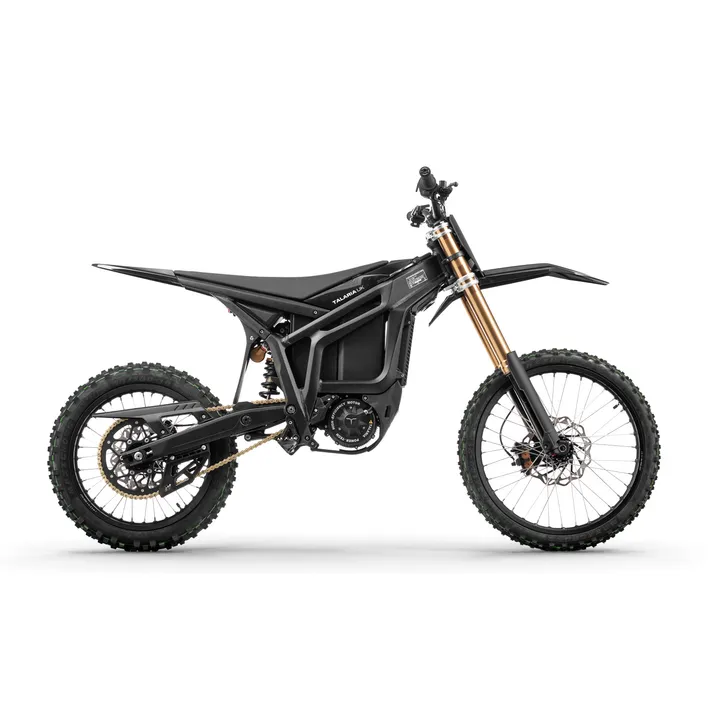
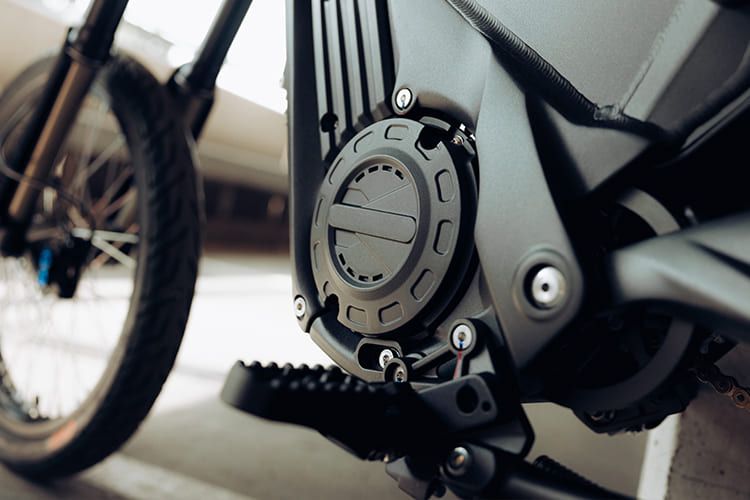
Some of the most common Talaria questions are about speed limiters: does a Talaria have a limiter, how fast is it without one, and how do you make a Talaria road legal in the UK? These are fair questions — but the answers matter, because getting them wrong can leave you with a bike that’s illegal on the road and uninsured. Here’s the honest, legal picture, and the right way to get the performance (or the road legality) you’re after.
Does a Talaria have a speed limiter?
It depends on the version:
- Off-road / MX models (X3 MX Pro, Sting R, Sting Pro, Komodo) are unrestricted for use on private land — they run their full top speed out of the box.
- Road-legal models (L1E and L3E) have a built-in restriction that keeps them inside their legal category: 28 mph for L1E, and 59 mph for the L3E Komodo. This restriction is a legal requirement of EEC type approval — it’s what makes the bike road legal, not a defect.
How fast is a Talaria without the limiter?
If it’s the raw performance you want, you don’t need to touch a limiter — you just need the off-road version, which already runs unrestricted on private land:
| Model | Top speed (off-road, unrestricted) |
|---|---|
| X3 Mini / X3 Pro | 47 mph |
| Sting R | up to 55 mph |
| Sting Pro | up to 60 mph |
| Komodo | 65 mph |
For the full breakdown see how fast is a Talaria. The point is simple: the off-road MX models give you the full speed legally on private land. You don’t gain anything by trying to derestrict a road-legal bike — you just make it illegal.
Can you derestrict a road-legal Talaria for the road?
No — not legally. Removing or altering the speed restriction on a road-legal L1E or L3E Talaria breaks its type approval. A bike that no longer matches its approved specification is illegal to ride on public roads, and it will typically invalidate your insurance — which means if anything happens, you’re uninsured and liable. It can also affect your warranty.
So the honest advice is: don’t derestrict a road-legal bike. If you want more speed, there are two legal options below.
How to legally get more speed — or make a Talaria road legal
There’s no legal way to “convert” an off-road MX Talaria for the road: UK road use requires factory EEC type approval that MX bikes simply don’t have. Instead, choose the right bike for what you actually want:
- You want maximum, unrestricted speed: buy the off-road (MX) version and ride it on private land with the landowner’s permission. Full performance, completely legal.
- You want to ride on the road: buy a factory road-legal Talaria — an L1E (28 mph, ride from 16 on a CBT) or the L3E Komodo (restricted to 59 mph, needs an A1 licence). Then register it with the DVLA, tax it, insure it and ride legally.
- You want the highest legal road speed: that’s the L3E Komodo at 59 mph — the fastest road-legal Talaria in the UK.
For the full rules, see are Talaria bikes road legal? and L1E vs L3E explained.
The bottom line
- Off-road Talarias are already unrestricted — full speed, legal on private land.
- Road-legal Talarias are restricted by law — don’t tamper with that, or you lose your road legality and insurance.
- To ride on the road, buy a factory road-legal model; to go flat-out, buy the MX model for private land.
Not sure which version you need? Use the Talaria bike finder, read the beginner’s buying guide, or browse the range and buy direct from the official UK distributor.
This guide is general information, not legal advice. Always check the latest DVLA/DVSA guidance for your circumstances.
Frequently asked questions
Does the Talaria have a speed limiter?
Road-legal Talaria models (L1E and L3E) have a built-in speed restriction that keeps them within their legal category — 28 mph for L1E, and 59 mph for the L3E Komodo. Off-road (MX) models are already unrestricted for private-land use. The restriction on road-legal bikes is a legal requirement of type approval, not a fault.
How fast is a Talaria without the limiter?
Off-road Talaria models run with no speed restriction on private land: the Sting R reaches up to 55 mph, the Sting Pro up to 60 mph and the Komodo 65 mph. If you want that full performance, the correct route is to buy the off-road (MX) version and ride it on private land — not to remove the restriction from a road-legal bike.
Can you derestrict a road-legal Talaria for the road?
No — legally you cannot. Removing or altering the speed restriction on a road-legal L1E or L3E Talaria makes it non-compliant with its type approval, which is illegal to ride on public roads and will typically invalidate your insurance. If you want more speed, buy the off-road MX version for private land, or an L3E model for a higher legal road speed.
How do you make a Talaria road legal in the UK?
You don't convert an off-road MX bike — UK road use requires factory EEC type approval that MX models don't have. The legal route is to buy a road-legal L1E or L3E Talaria, which is certified for the road from the factory, then register it with the DVLA, tax it, insure it and ride with the correct licence or CBT.
Does the Talaria X3 have a speed limiter?
The off-road Talaria X3 MX Pro is unrestricted for private-land use and tops out at 47 mph. The road-legal X3 Pro Road Legal is an L1E model restricted to 28 mph so it can be ridden legally on UK roads from age 16 on a CBT.
Will removing the limiter void my warranty or insurance?
Tampering with a road-legal bike's speed restriction or fitting non-genuine performance parts can affect your warranty and, on the road, can invalidate your insurance and road-legal status. Keep road-legal bikes as type-approved, and enjoy full performance on an off-road model on private land instead.
Models mentioned in this guide
- Talaria X3 Pro Road Legal The road-legal X3 Pro. Compact, light and EEC-approved for UK roads on a CBT.
- Talaria Sting R L1E Road Legal The road-legal Sting R. Register it, insure it, ride it on UK roads with a CBT.
- Talaria Komodo L3E Road Legal The road-legal Komodo. 32 kW, 17-inch road wheels and L3E type approval for full UK road use.